Choice & Voice
A Series of 30 Minute Plays for Young People
Touring into Schools, Colleges and Further Education Settings Produced by The Playhouse, Derry~Londonderry
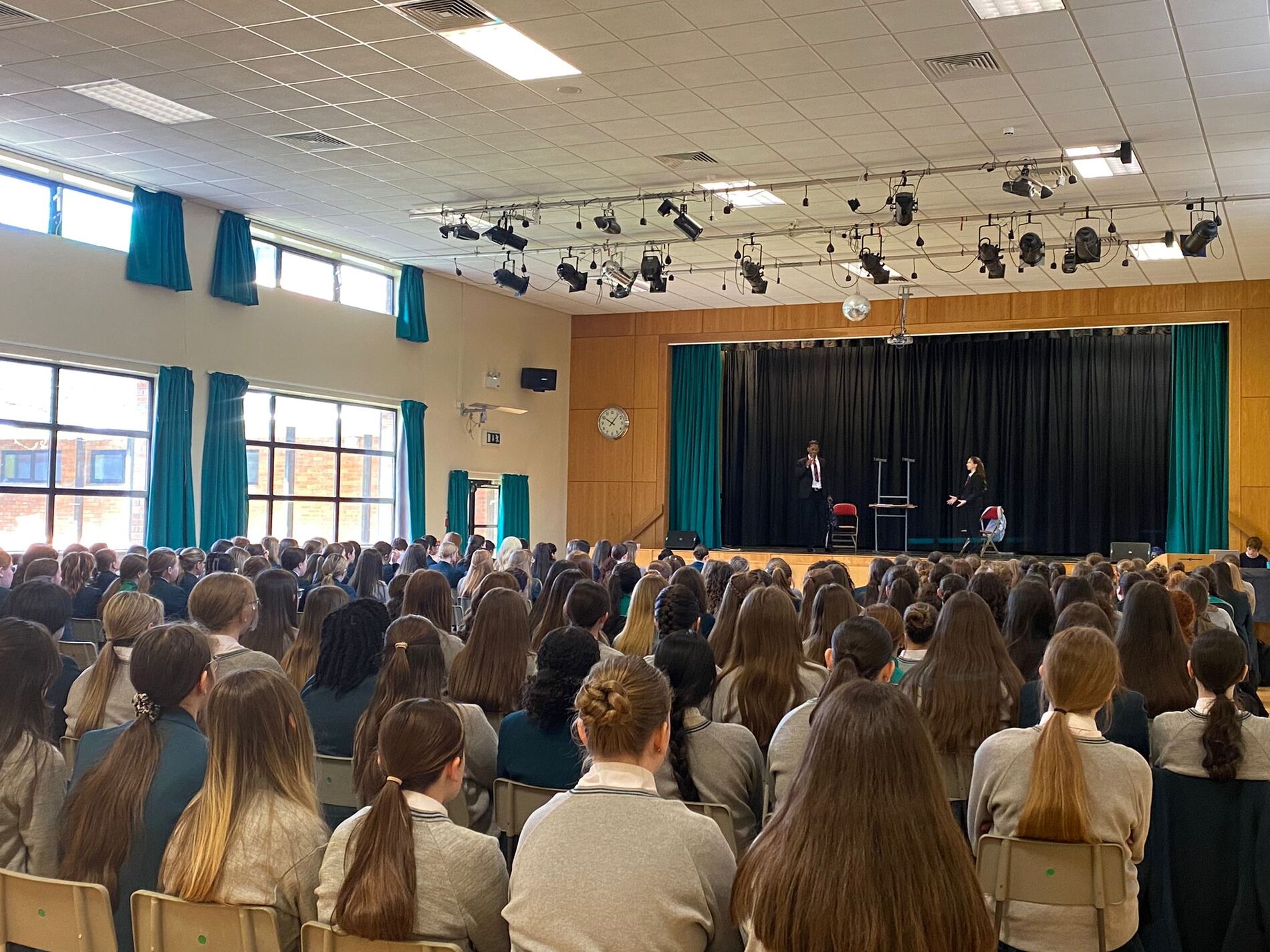
This series of four sharp, 30 minute plays tours directly into the spaces where young people already are, including schools, colleges, FE institutions and clubs to engage with the social issues they are living inside. Not to preach. Not to answer. But to hold up a mirror, spark a conversation, and trust young people to find their own way forward.
Each piece is developed with young people's steering groups, ensuring the work is authentic, honest, and genuinely responsive to lived experience.
Every production is accompanied by a ‘That's Powerful’ Short Form Workshop and will be published together as a learning resource for schools and educators. Performances are followed by post show discussion and supported learning, giving audiences space to reflect, respond, and connect with further resources where needed.
The Plays
HOME
When racism towards migrants is rising in Northern Ireland, a school that feels uncomfortably familiar becomes the battleground for something much bigger than student politics. Bold, funny and urgent, HOME asks what it really means to belong and who gets to decide.
FIX
Drug use among young people in Northern Ireland is not a niche issue. Cocaine is now among the most commonly reported substances for those presenting to treatment services, with almost three fifths of all drug clients indicating daily use. Drug seizure incidents in Northern Ireland remain nearly three times the level recorded in 2006/07, even as services struggle to keep pace.
FIX is an unblinking look at the world that drives those statistics: the pressure, the pain, and the systems that look the other way. Aimed at post primary school pupils and young people in FE, HE and technical college settings, it does not moralise about choices. It asks what society has built that made those choices feel necessary.
CRINGE
The Manosphere is everywhere; in feeds, in bedrooms, and in the language young men are quietly absorbing. Eighty percent of 16 and 17 year old boys in the UK have consumed content created by Andrew Tate. One in six boys aged 6 to 15 holds a positive opinion of him. Sixty nine percent of boys aged 11 to 14 have encountered misogynistic content online without searching for it.
CRINGE is a two hander that walks directly into that world and laughs at it. With sharp comedy and a forensic eye, it holds the Manosphere up to the light and exposes it for what it is: ridiculous, cringe worthy, and genuinely dangerous. It is not an attack on young men. It is made for them, inviting them in as allies, offering a different conversation about identity and belonging, and asking what it actually means to be a man right now.
THEM
Children in Northern Ireland begin developing sectarian awareness as young as three years old, with many holding deeply entrenched opinions by the age of ten or eleven. Sixty percent of young people surveyed were taught negative views about people of opposing religious backgrounds by their own parents. Sectarian incidents recorded by police rose to their highest level since 2016 in the 2021/22 period, and two thirds of young people report having been personally affected by sectarianism.
THEM is a piece about the world that makes those numbers possible. It looks at the older power structures, the community pressures and the voids of belonging, identity and purpose that make young people vulnerable to being recruited into someone else's conflict. It asks not just who is doing the grooming, but what conditions we have created that make it so easy.
HOME. FIX. CRINGE. THEM.
Four different issues. One connecting thread.
Each play exposes the hierarchical systems, such as the power imbalances, the institutional failures, and the cultures of silence, that allow these problems to take root and grow. They do not offer easy answers. They are not designed to. They are designed to make young people feel seen, to make them think harder, and to make the silence after the lights go down feel full of possibility rather than emptiness.
This is theatre that respects its audience. That starts where they are and that leaves them somewhere new.
Principal Funder:

Box Office Open Hours.
- MONDAY - CLOSED
- TUESDAY - CLOSED
- WEDNESDAY 1PM-4PM
- THURSDAY 1PM-4PM
- FRIDAY 1PM-4PM
- SATURDAY 10AM-4PM
The Playhouse
5-7 Artillery St
Derry / Londonderry
BT48 6RG
Tel: 028 71 268027
Privacy Policy | Cookie PolicyThe Playhouse is registered as: North West Play Resource Centre Registered with The Charity Commission for Northern Ireland No: NIC 100119 Company Registration: NI 26912.
a zoocreative website